The Will of the Many
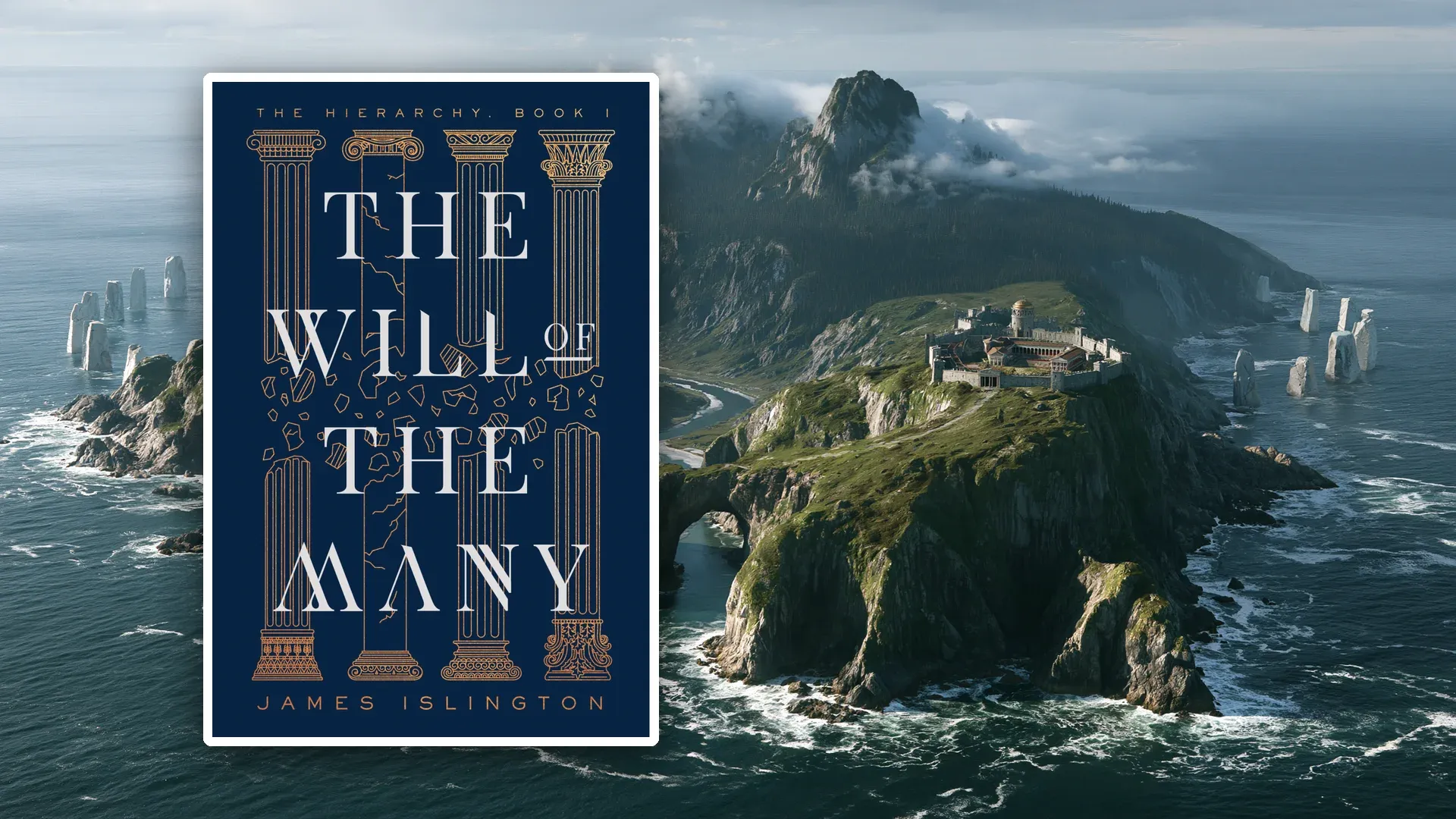
The Will of the Many by James Islington is one of the best books I’ve read in a while. Fantasy, sci-fi, Roman Empire, school story, mystery. It’s sort of all of those at once and it somehow works.
I’ll keep this light on spoilers.
What’s it about?
Vis is a 17 year old orphan working nights in a prison. He’s also secretly the last prince of a country the Catenan Republic conquered, and he’s been hiding inside that same Republic ever since. A senator figures out Vis isn’t who he says he is, adopts him anyway, and sends him to the Academy - the school that produces the Republic’s future leaders - to find out what the man running it is hiding.
That’s the setup. It gets a lot more complicated from there.

Foundation, the strategy board game Vis plays (and wins) against the old jailer in the opening chapter.
The world
The setting is basically Rome. Senators, togas, bathhouses, gladiator arenas, a festival for every god. But then you get Transvects, massive freight carriers that float 70 feet off the ground and cross a country overnight. Ships with no sails. Training armour that fights for you from 15 feet away. A barrier around an island that drags anything trying to cross it to the bottom of the ocean.
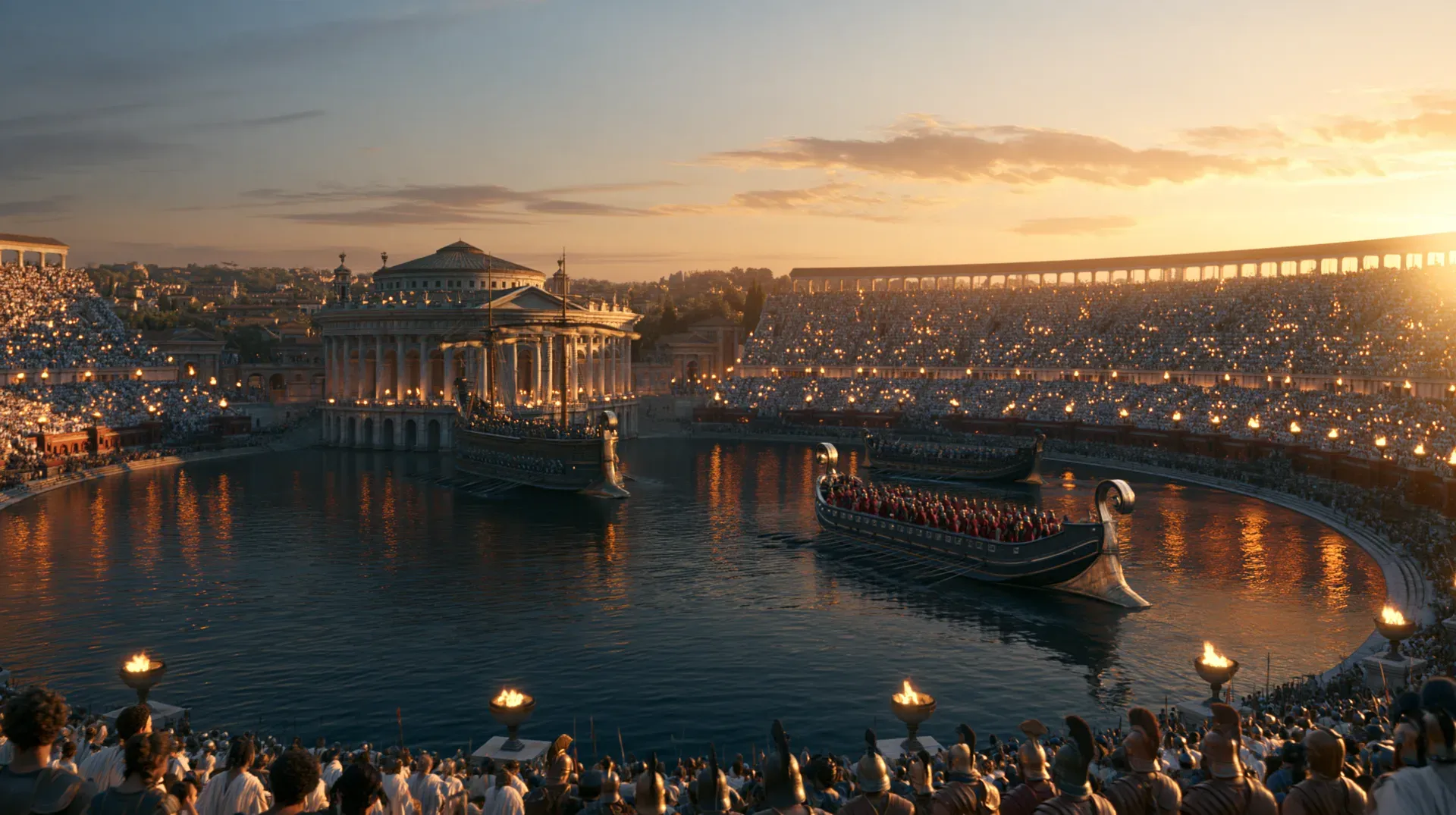
The Catenan Arena flooded for a naumachia (a staged naval battle).
It’s an interesting mix of fantasy and sci-fi, and what makes it work is that all of it runs on Will. Everyone in the Republic gives (cedes) half their Will to the person ranked above them, who passes it up again, all the way to the top. That’s what powers everything. So every one of those floating freight carriers is moving because a lot of people at the bottom are a little more tired than they should be.
Even the coins are shaped like triangles. There’s a chart before the first chapter showing every rank and how many people cede to it. It sets the tone pretty well.
The other thing I really liked is that the Catenans didn’t invent most of their tech. They dug it up from ruins left behind by a civilization that ended 300 years earlier (the Cataclysm), and they still don’t fully understand a lot of it. That gives the whole world a sense of mystery.
Will is explained as you go
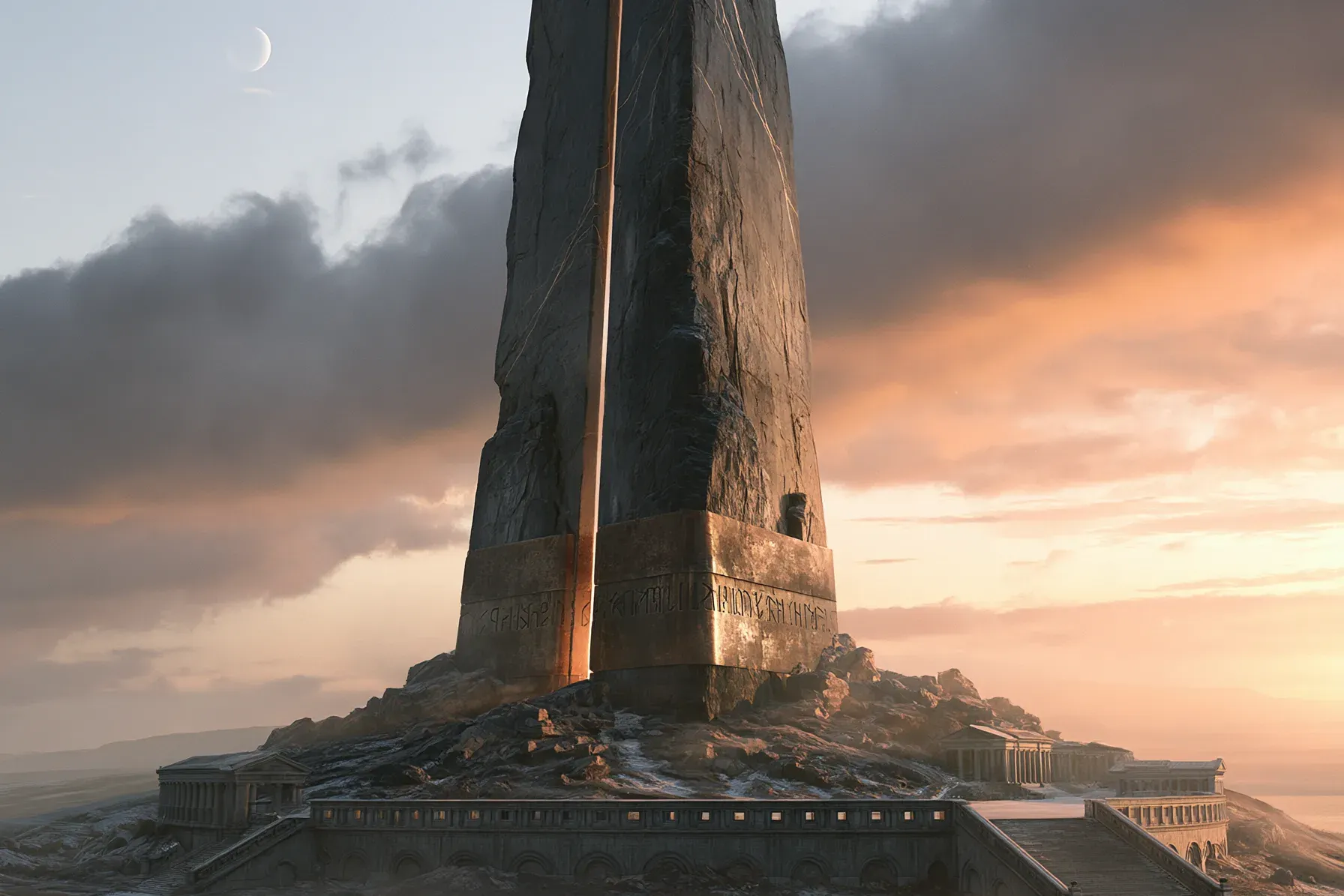
An Aurora Columna, one of the ancient pillars kids are brought to at 12 so they can start ceding their Will.
This is one of the things I loved most about the book. Will isn’t dumped on you up front. It’s explained in small pieces, usually right when the story needs it.
A good example: when Vis rides a Transvect for the first time, Ulciscor asks him how much Will he thinks it takes to run. Vis works it out loud and gets most of it right. Ulciscor gives him two terms and basically says “that’s enough for now.” Later, when Lanistia is teaching him the Labyrinth, Vis asks how it works and she tells him it’s beyond his level of education. Master it first, then she’ll explain the details.
The book does the same thing to you as the reader. You learn it once you’ve earned it. And because not everything is laid out, there’s always a sense of awe and curiosity hanging around while the story keeps building. Even by the end, nobody in the book has the full picture. That keeps the world feeling big.
Being inside Vis’s head
The book is first person, present tense, and you get almost all of Vis’s internal dialogue. That makes a huge difference here because Vis is always acting. He’s hiding who he is from literally everyone, so every conversation is a performance. You’re the only one who gets to see what he’s actually thinking.
It really puts you in his shoes. You understand where he’s coming from and why he makes the choices he does, and you almost start seeing the other characters the way he does. Reading their faces, noticing when something doesn’t add up. So when someone finally sees through him, it hits hard, because you’ve been holding that secret with him the whole time.
There’s a stretch later in the book (I won’t say where) where being inside his head is honestly rough to read. In a good way.
The characters
Every character has their own personality, real depth, and a different way of dealing with Vis.
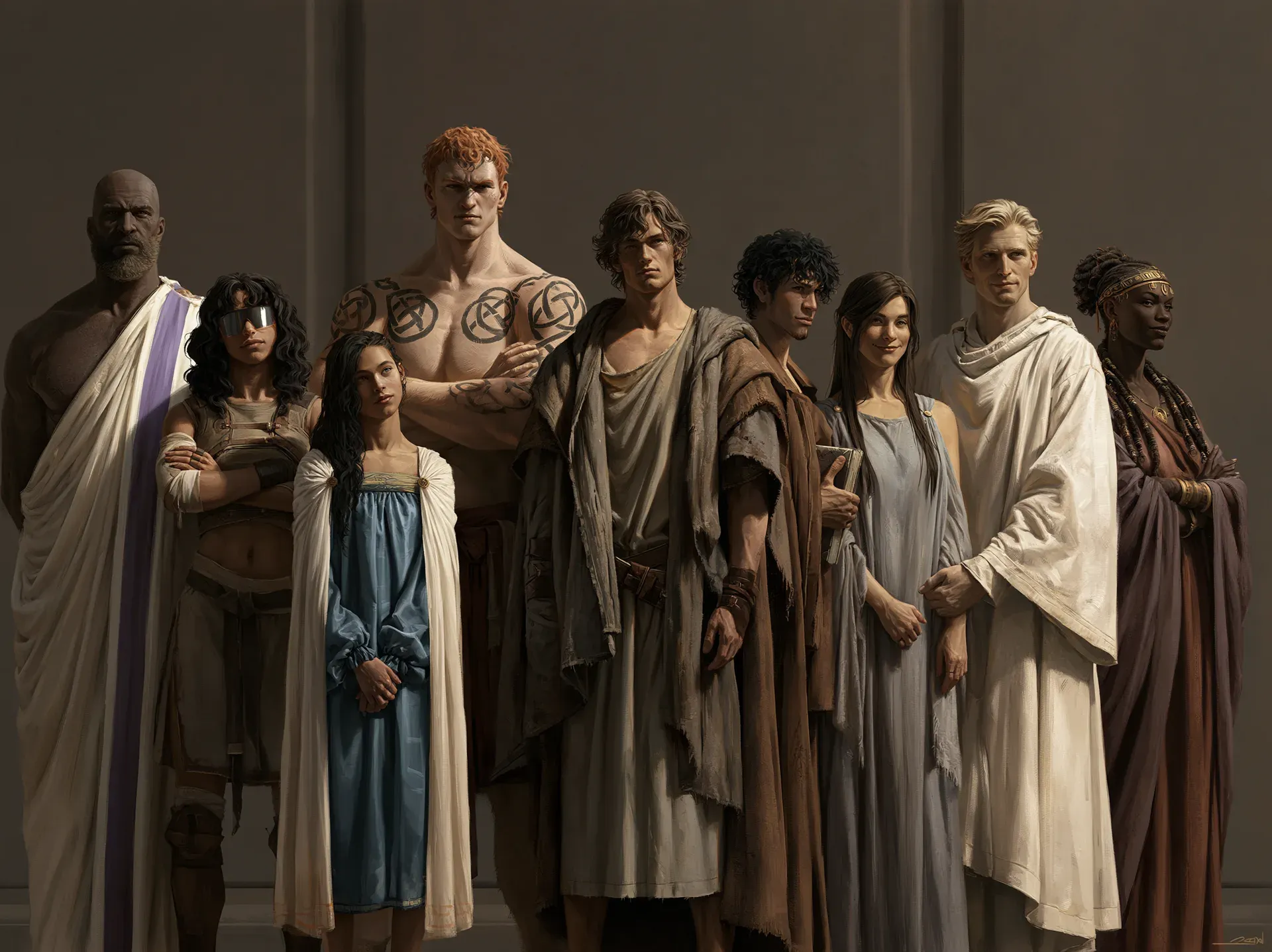
Some of the cast. Ulciscor in the toga, Lanistia in her dark glasses, Eidhin with the tattoos, Vis in the middle, and Callidus with the book.
Quick note on the images in this post: they were created using AI based on my descriptions of the characters and places, so they’re my “head canon” for what everything looks like.
- Ulciscor - the senator who adopts Vis. Smart, calculating, and still grieving his younger brother. Warm one minute and threatening to throw Vis in a Sapper the next.
- Lanistia - Vis’s tutor. She has no eyes and somehow sees better than everyone. Brutal teacher. Tests Vis by attacking him in his bed in the middle of the night (yes, really).
- Callidus - smarter than almost everyone at the Academy and sitting in the lowest class on purpose. His friendship with Vis is the warmest part of the book.
- Eidhin - huge, barely talks, and introduced by punching Vis in the head. There’s a scene where he and Vis insult their teacher to his face in a language the teacher doesn’t speak. It’s hilarious.
- Emissa - warm, easy to talk to, and the one person Vis seems to forget to be careful around.
- Aequa - so convinced Vis is hiding something that she keeps investigating him. She’s right, just about the wrong thing.
None of them feel like they exist just to serve Vis’s story. They all want something, and a few of them are keeping secrets of their own.
Read this one.
If you like fantasy with world building that actually holds together, characters that feel like real people, and a mystery that keeps pulling you forward, read this one.
James Islington
2023